
The difference between an AI agent vs chatbot vs automation comes down to who decides the next step. A chatbot talks: it answers questions in a conversation. Automation follows fixed rules you set in advance. An AI agent is software that uses an AI model to work towards a goal, choosing its own steps and using your tools to get there.
At a glance: use a chatbot when people need answers, automation when the steps never change, and an agent when the steps change from case to case and need judgement. Many good systems mix all three. Start with the simplest option that does the job, because agents cost more to build, test and run.
Three plain definitions
Chatbot. IBM defines a chatbot as software that communicates with people through text or voice, answering questions and helping them complete tasks. Older chatbots follow a script of buttons and set replies. Newer ones use a large language model (LLM), the type of AI behind tools like ChatGPT, to understand free-text questions and reply naturally.
Automation. Rule-based automation runs a fixed series of steps when something happens. Microsoft describes Power Automate as a way to automate repetitive tasks and create workflows between apps, for example to sync files, send notifications or collect data. The rule is always "when X happens, do Y". It never improvises.
AI agent. Google describes AI agents as software systems that use AI to pursue goals and complete tasks on behalf of users, with some freedom to plan and decide. Anthropic draws the most useful line: in a workflow, the AI and tools follow predefined code paths, while an agent directs its own process and decides which tools to use.
Side by side: the comparison table
| Chatbot | Automation | AI agent | |
|---|---|---|---|
| What it does | Holds a conversation and answers questions | Moves data and triggers actions between systems | Completes a task from start to finish across several tools |
| How it decides | Follows a script, or an AI model picks the best reply | Fixed rules written in advance | An AI model plans the steps and chooses tools as it goes |
| Typical examples | Website FAQ helper, order status replies, booking questions | New form entry added to the CRM, invoice copied to a shared folder, weekly report emailed | Reading an enquiry, checking stock and pricing, drafting a quote, logging it in the CRM |
| When to use it | Lots of repeat questions with known answers | The steps are identical every time | Each case is a bit different and needs judgement |
| Rough effort | Low to medium | Low for simple rules, higher with many systems | Medium to high, with more testing and monitoring |
A CRM (customer relationship management system) is simply where you keep your contacts, deals and conversations.
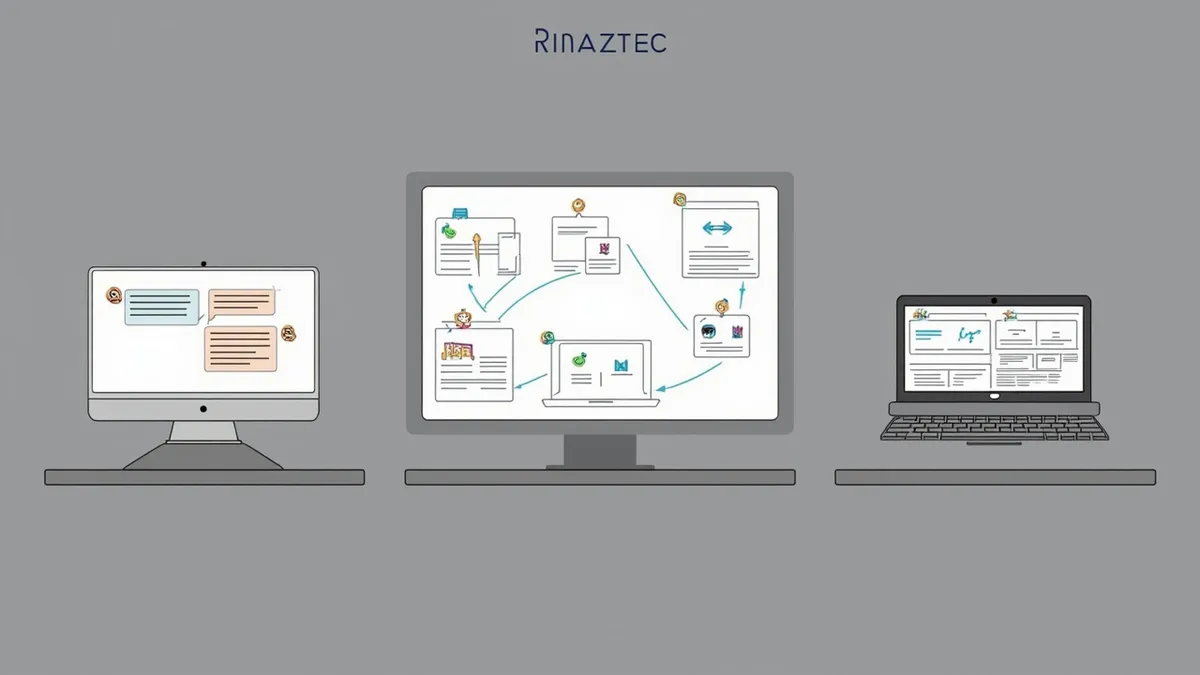
Where the lines blur
The labels overlap in real products. A chatbot that can look up an order and issue a refund is starting to act like an agent. An automation that sends an email to an AI model for a summary is still automation, because the steps are fixed and the AI only fills in one of them.
A simple test helps. Ask: "Who decides what happens next?" If a script or rule decides, it is a chatbot or automation. If the AI decides which step comes next and which system to touch, it is an agent. Google makes a similar point, placing bots at the least autonomous end, assistants in the middle and agents at the most autonomous end.
Vendors also use "agent" loosely in marketing. When you compare products, ask what the system can actually do without a person, and which of your systems it can change.
Which one do you need?
Work through these questions in order. Stop at the first "yes".
- Are the steps exactly the same every time? For example, "when a form is submitted, add the person to the CRM and email the sales team". Use automation. It is cheaper, faster and easier to trust.
- Is the main job answering questions? For example, opening hours, delivery times, what a service includes. Use a chatbot trained on your own pages and policies, with a clear hand-over to a person. If your customers write in Arabic, see our guide to Arabic AI chatbots and dialects.
- Does the task need reading, judging and acting across several systems? For example, sorting mixed supplier emails, matching them to orders and drafting replies. This is where an agent earns its cost.
- Is a wrong decision expensive or hard to undo? Keep a person in the loop. Let the agent prepare the work and a human approve it.
Anthropic's own advice to builders is to find the simplest solution possible and only add complexity when it is needed, which may mean not building an agent at all. That is good advice for buyers too.
Common mistakes when choosing
- Buying an agent for a rules job. If a simple "if this, then that" flow will do, an agent adds cost and unpredictability for no gain.
- Expecting a chatbot to do work. A chatbot that can only talk will not update your systems. If you need actions, plan for integrations from the start.
- Skipping the hand-over. Every chatbot and agent needs a clear route to a person when it is unsure.
- No way to check its work. Keep a log of what the system did and why, so you can spot errors early.
Often the right answer is a mix: automation for the fixed steps, a chatbot at the front door, and an agent only for the part that needs judgement. Off-the-shelf tools cover many simple chatbot and automation needs well, so check those first.
How Rinaztec can help
We build custom AI agents and chatbots that connect to your tools and data, answering customers, reading documents, qualifying leads and updating your systems. If a simple automation or an off-the-shelf tool will do the job better, we will say so. See our AI agent development service: projects start from $6,000 and typically go live in 3 to 5 weeks.
Not sure whether you need a chatbot, automation or an agent? Book a free 30-minute call and we will help you pick the simplest option that works.