
Most AI automation projects fail before anybody writes code. They fail in the conversation where nobody asked whether the process being automated actually works.
We get a version of the same enquiry most weeks. A business owner has read that AI can handle their enquiries, or their paperwork, or their phone line, and wants to know what it would cost. It is a fair question. It is also the second question, not the first.
The first question is what is actually going wrong, and whether AI is the right tool for it. Sometimes it clearly is. Often the honest answer is that a simpler fix would work better, cost a fraction as much and break less often.
This is how we work that out before anyone commits to a build.
We start with the workflow, not the technology
The first conversation is a free thirty minute call, and we spend almost all of it asking about how your business runs rather than talking about what we could build.
What happens when an enquiry comes in at seven in the evening. Who sees it first. What do they do with it. Where does it get written down. What happens if that person is on holiday.
Those questions sound basic. They are also where the real problem usually surfaces, and it is frequently not the one the business came in with. Someone asks for a chatbot and the actual issue is that enquiries arrive in four places and nobody owns the follow up. A chatbot would have added a fifth place.
We would rather find that out on a call than four weeks into a build.
Three questions that decide whether AI is the answer
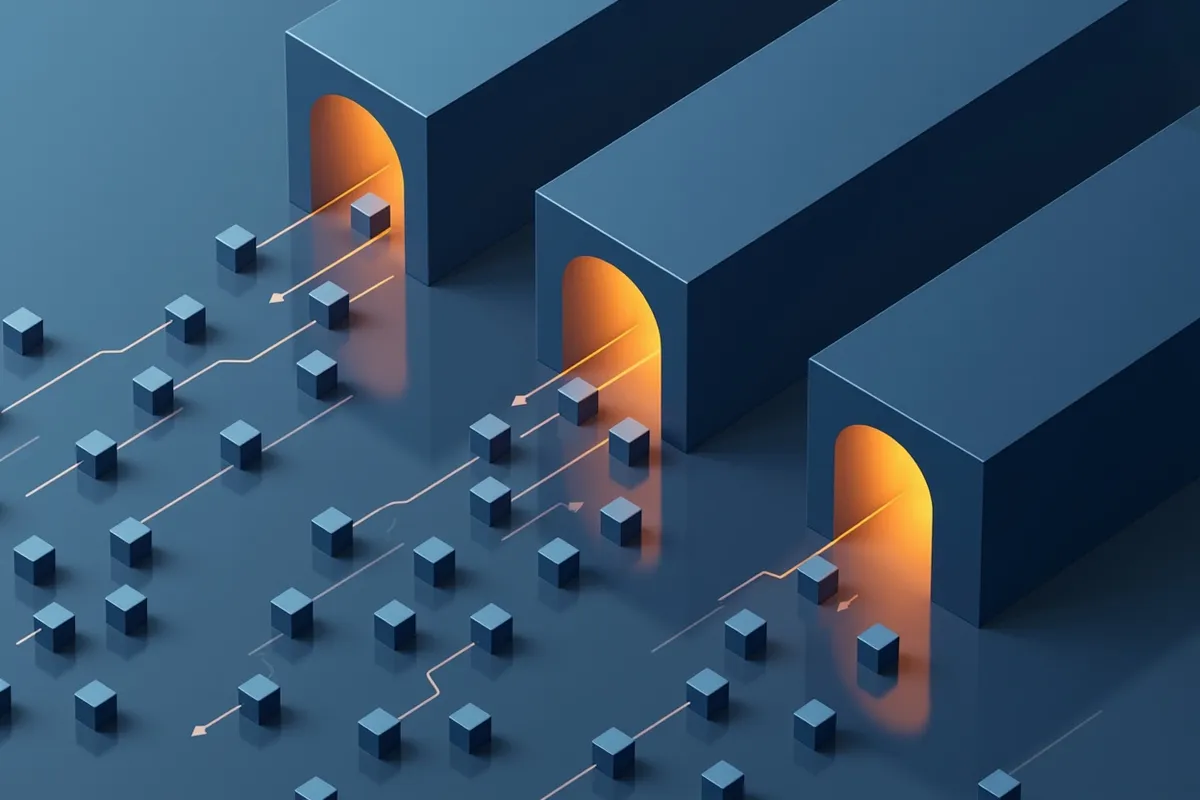
Once we understand the workflow, we are looking for three things. If a task has all three, automation usually pays for itself quickly. If it has none, we will say so.
- Does it happen often enough to matter? A task that takes twenty minutes and happens forty times a week is worth automating. The same task once a month is not, no matter how irritating it is.
- Is the process consistent? If two people do the job differently and both are right, the rules are not written down yet. Automating an inconsistent process just produces inconsistent results faster.
- Does going wrong actually cost something? A missed call that was a supplier is an annoyance. A missed call that was a customer with a job worth thousands is a different conversation entirely.
When a task scores well on all three, the case usually makes itself. When it does not, we say that on the call rather than writing a proposal for it.
Sometimes the answer is not AI at all
This is the part that costs us work and we do it anyway.
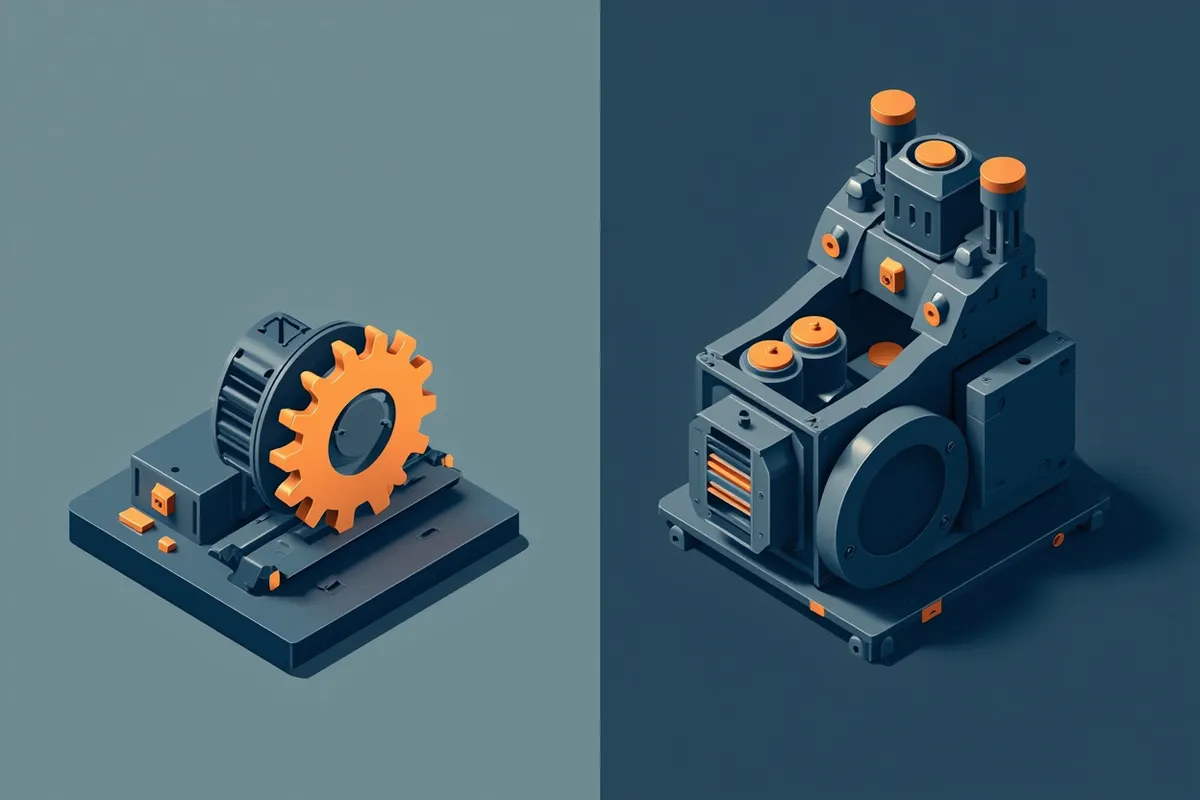
A meaningful share of the problems we get asked to solve with AI are better solved with ordinary automation. If a process follows fixed rules, with no judgement involved, then a straightforward automated workflow is more reliable, easier to fix when something changes, and dramatically cheaper to run than a language model making the same decision.
The rough test we apply: if you could write the rule down as a flowchart and it would still be correct next year, you probably do not need AI. AI earns its keep where there is genuine variation to interpret, a conversation to hold, a document to read, or messy input to make sense of.
Occasionally the answer is not software at all. Sometimes a business is paying for three tools that overlap and the fix is turning one off. We will tell you that too, even though there is no project in it for us.
What we check before quoting
If AI does look like the right answer, there are a few practical things that decide whether it will work in your business specifically.
- What information does it need, and does that exist in a usable form? An AI agent answering customer questions needs somewhere to get the answers. If your pricing lives in one person's head, that is the first thing to fix.
- What systems does it need to touch? Booking into your calendar, writing to your CRM, sending the invoice. Each connection is real work, and some systems make it easy while others genuinely do not.
- Where does a human need to stay in the loop? We match oversight to risk. Drafting a reply for someone to approve is a different level of autonomy from sending it, and taking a booking is different from taking a payment.
- What does it do when it does not know? This is the question most people never ask and it matters more than accuracy. A system that confidently invents an answer is worse than one that says it will pass you to a person.
- What happens when it breaks? Because it will, at some point. There needs to be a path that does not depend on it.
We plan the whole thing before writing code
Our second step is mapping the entire project on paper and agreeing it with you, including the budget, before anybody starts building.
That document says what the system will do, what it will not do, what it connects to, and where a person stays involved. Getting this written down is unglamorous and it prevents the most expensive failure mode in this work, which is discovering halfway through that two people had different pictures in their heads.
You approve the plan and the budget at this stage. Nothing gets built against a vague brief.
You see it working in week one

Once building starts you get a working preview link from the first week and a demo every week after that.
This matters more for AI projects than for ordinary software. With a booking form, everyone can picture the result. With an AI agent handling calls or reading documents, nobody can really judge it from a specification. You have to hear it, or watch it work on your actual paperwork.
Seeing it early is also how you find out it needs to sound less formal, or that it should pass certain calls straight to a human. Those are adjustments in week two and expensive rewrites in month three.
Then we stay
Launch is not the end of an AI project, and any agency telling you otherwise has not run one.
Real customers ask things nobody predicted. Your prices change. You add a service. A system left alone drifts away from the business it was built for, and the failure is quiet, because it keeps answering confidently while being subtly wrong.
We offer ongoing maintenance from $900 a month, or a part time dedicated engineer from $4,500 a month if you want continuous development rather than upkeep. Whether you take that from us or handle it internally, plan for it, because unmaintained automation is worse than none.
What we build in this space
Our AI work falls into two categories, both priced from a starting point that depends on what you actually need.
- AI voice agents, from $4,500. An agent that answers the phone, holds a real conversation, books into your calendar, sends follow ups and passes complex calls to a person. Every call logged with a transcript.
- Custom AI solutions, from $6,000. Chatbots trained on your business, document analysis and search, automatic responders, lead scoring and qualification, and AI built into software you already use.
Those are starting points rather than quotes. What it costs depends on how many systems it connects to and how much variation it has to cope with, and we tell you that on the call rather than after.
Why we work this way
Because the alternative is building things people stop using.
It is not difficult to sell a business an AI project. It is considerably harder to build one that is still earning its keep a year later, and that only happens when the thing being automated was worth automating in the first place.
We would rather have a shorter conversation and tell you honestly that your problem needs a process change, a cheaper tool, or nothing at all. The businesses we turn away tend to come back later with something we genuinely can help with, which is a better outcome than a project neither side was proud of.
Have a conversation with us
If you think something in your business could be automated, the useful next step is a free thirty minute call where you explain what is happening and we tell you honestly whether we can help.
No pitch and no pressure. If the right answer is a tool you can buy tomorrow or a supplier who is a better fit, we will point you there.
- Email: riaz@rinaztec.com, and we respond within one business day
- Book a call: rinaztec.com/contact
- What we build: rinaztec.com/services
Rinaztec Ltd is based at DMC, County Way, Barnsley, S70 2JW.
Tell us what is slowing your business down and we will tell you what we would actually do about it.